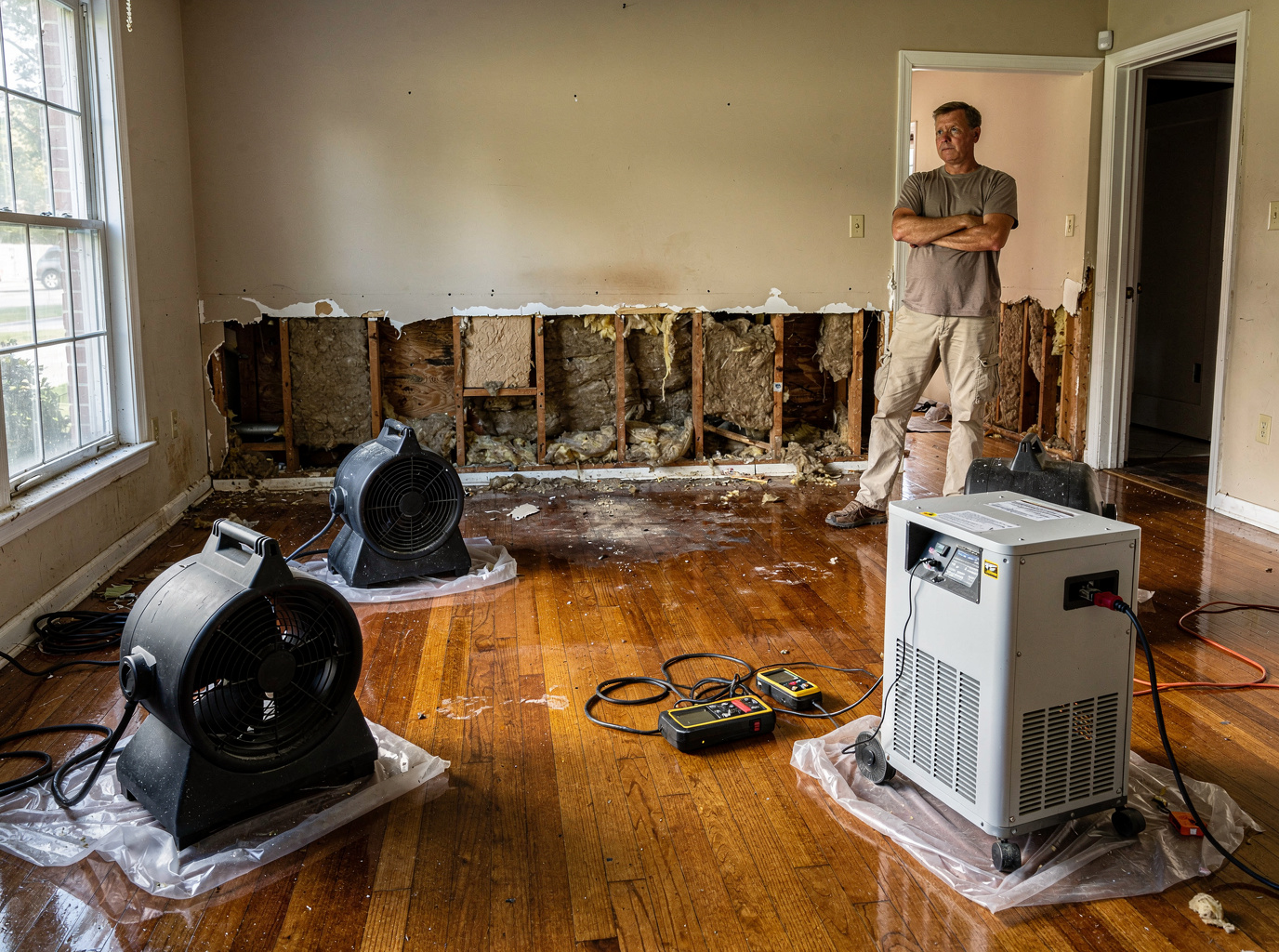
Structural drying and dehumidification focuses on extracting trapped moisture from wood framing, drywall, insulation, and concrete slabs once standing water is gone. In Raleigh's humid subtropical climate, high summer humidity combined with mild winters can slow natural evaporation and raise the risk of hidden dampness in older homes found in neighborhoods such as Oakwood, Boylan Heights, and Mordecai. Independent local providers typically use moisture meters, air movers, and commercial dehumidifiers to bring materials back to acceptable drying standards.
Common triggers include roof leaks during thunderstorms, appliance failures, or plumbing issues in homes throughout North Hills, Five Points, and Falls of Neuse. Materials like hardwood subfloors and plaster walls common in Wake County housing stock can hold water longer than newer construction, creating conditions where mold growth may begin within days if drying is incomplete. A local restoration professional may assess hidden cavities behind cabinets or under flooring before setting up equipment.
Safety considerations include electrical hazards near wet surfaces and potential airborne contaminants when porous materials are disturbed. Providers connected through Raleigh Water Damage Help may recommend temporary containment or removal of saturated insulation depending on the category of water involved. Homeowners should verify the independent provider's licensing and insurance directly, as coverage for drying services varies by policy and cause of loss.
Raleigh Water Damage Help connects consumers with independent local service providers. We do not perform restoration services ourselves. Timing for drying depends on the provider's availability, the size of the affected area, and site conditions such as access to power and ventilation.
Technician insight
In Raleigh, the thing that catches most people out with structural drying is how quickly humidity re-enters older plaster and lath walls in places like Hayes Barton or Glenwood South once equipment is removed too soon. The clay-heavy soils around Wake County keep basements damper longer than newer slab homes in Cary or Wake Forest, so monitoring readings for several days matters more than most homeowners expect.
Pipe Leak in North Hills Home
A kitchen supply line failed overnight in a North Hills residence, saturating oak flooring and the subfloor above a crawl space. The connected provider mapped moisture across multiple rooms, placed dehumidifiers and air movers, and removed sections of wet insulation. Daily readings showed levels returning to normal within five days, avoiding mold growth in the humid summer air.
Structural Drying & Dehumidification Services We Offer
✓Structural Drying Assessment
A local restoration professional may inspect affected materials with moisture meters to determine saturation levels and drying needs in Raleigh homes.
✓Commercial Dehumidification
An independent provider may place high-capacity dehumidifiers to lower humidity and pull moisture from air and building components after water intrusion.
✓Moisture Mapping and Monitoring
Homeowners may be connected with a provider who tracks moisture reduction over time in walls, floors, and ceilings using data loggers.
✓Drying of Affected Walls and Ceilings
A restoration company may set up targeted airflow equipment to dry interior wall cavities and ceiling materials without unnecessary demolition.
✓Humidity Control in Water-Damaged Areas
An independent provider may maintain controlled humidity levels in enclosed spaces to prevent secondary damage during the drying process.
How it works
- 1
Request Connection
Homeowners contact Raleigh Water Damage Help to request help locating an independent local service provider for structural drying needs.
- 2
Provider Matching
Callers may be connected with a participating local provider subject to availability in areas such as Downtown Raleigh or Cameron Village.
- 3
On-Site Evaluation
The independent provider evaluates moisture levels, affected materials, and site conditions to discuss possible next steps.
- 4
Scope and Terms
The provider determines pricing, scheduling, and service details based on the specific property and damage extent.
- 5
Work Performance
Any agreed drying or dehumidification work is performed by the independent provider according to their own terms.
Pricing
Costs are determined by the independent provider after evaluating the property. Main factors include the category and volume of water, size and materials of the affected area, extent of saturation in walls or flooring, need for demolition, length of drying time required, and any mold or contamination concerns. Raleigh Water Damage Help does not set prices.